
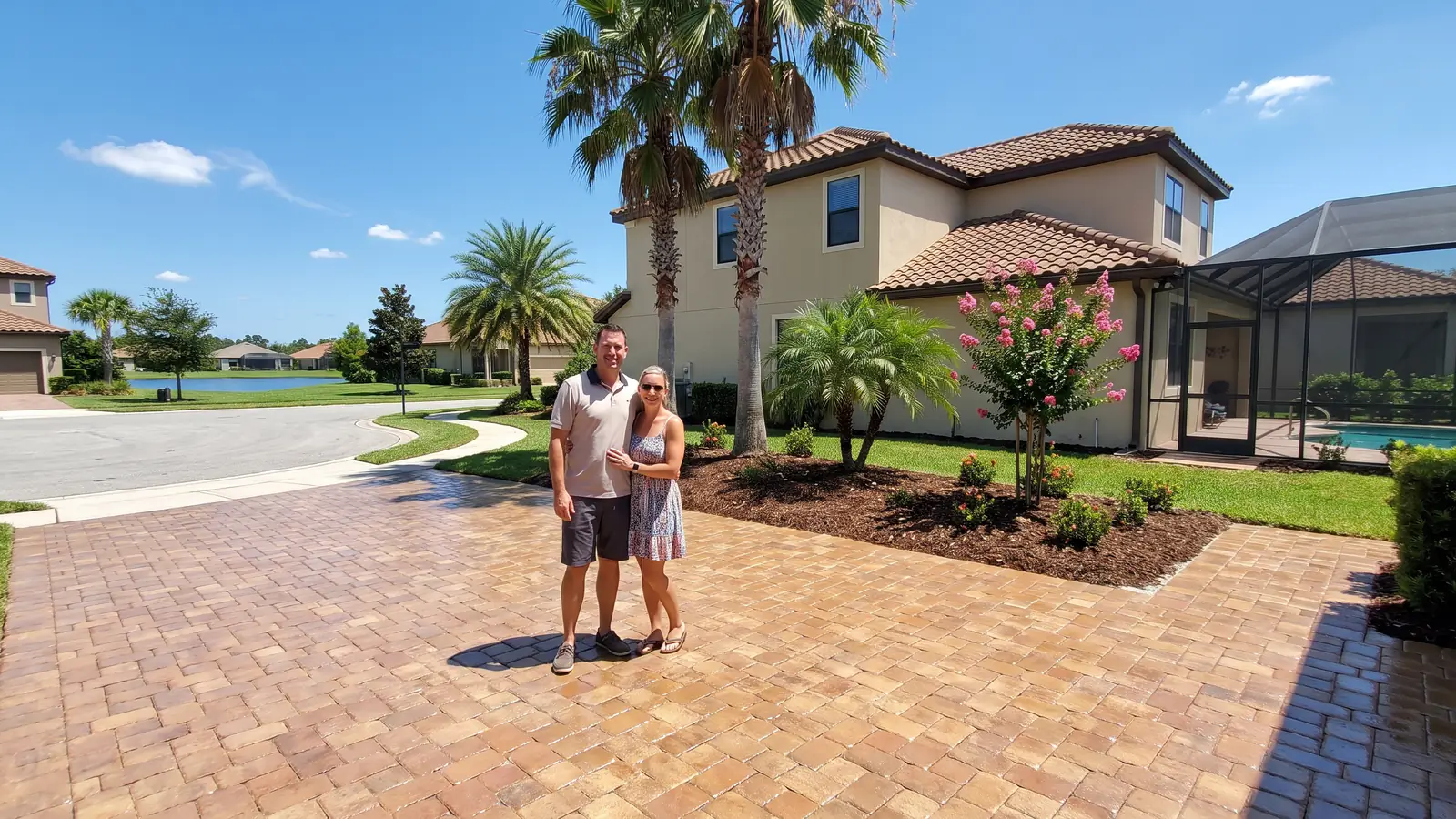
Richer color, tighter joints and easier upkeep
Paver Sealing in Kissimmee, FL
Call (689) 329-1279 for a free paver sealing estimate on a Kissimmee driveway, pool deck or patio.
- Brings out deeper paver color
- Fresh joint sand helps lock pavers in place
- Gives weeds less room to grow
- Makes the surface easier to keep clean
- Free estimate, no obligation
Request a Free Estimate
Free, no obligation.
Who can seal the pavers at my Kissimmee home?
A local contractor seals pavers throughout Kissimmee, FL, and you will hear back within 1 business day, usually much sooner. The estimate is free, and the booking is your call. To begin, call (689) 329-1279.
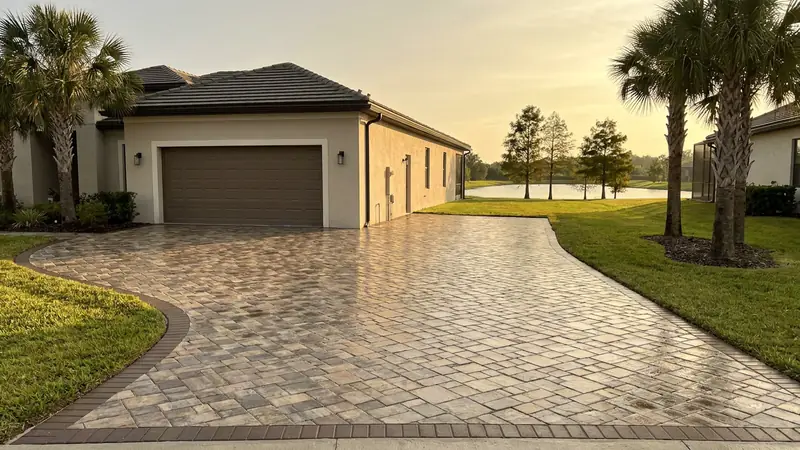
Sealing deepens the color of the pavers, keeps joint sand where it belongs and makes dirt and algae easier to rinse off. Picture the driveway at the end of a humid summer, dull at the edges and thin on sand, then dark, even and full again. A driveway takes tires and oil, while a pool deck takes splash water and bare feet, so each area gets its own plan. When you ask for your free estimate, mention how each paved area gets used.
Paver Sealing Kissimmee Is Proud to Serve Central Florida
What does a paver sealing job include in Kissimmee?
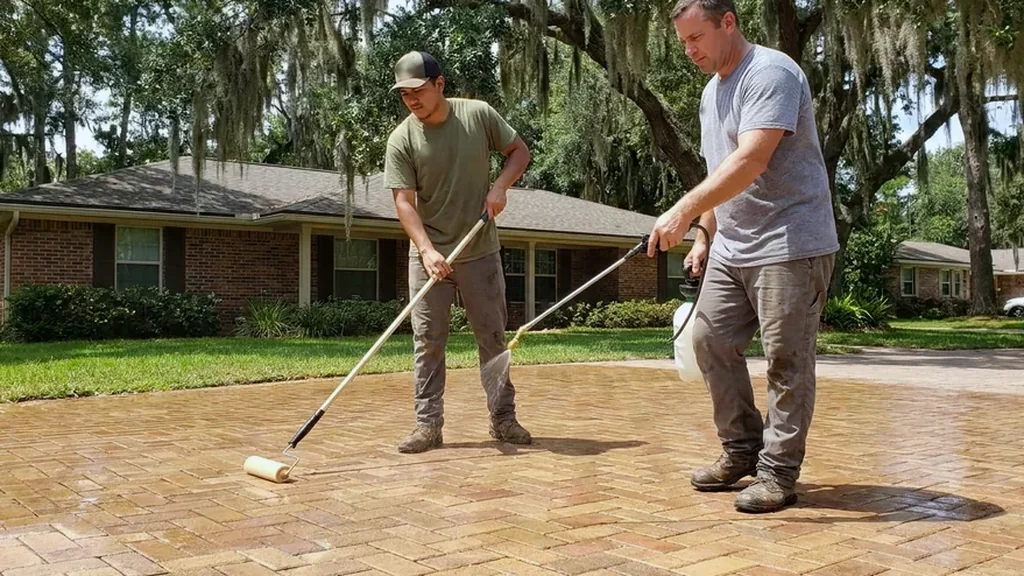
A sealing visit has four stages: a walk-through, a wash, new joint sand and the coat of sealer. The wash takes the longest. To walk through each stage, call (689) 329-1279.
Walk-through
Square footage, sunken pavers, bare joints, old sealer and standing water are all noted before a price is set.
Wash
Algae treatment, rust remover where needed and a low pressure rotary wash take the growth and grime off.
Joint sand
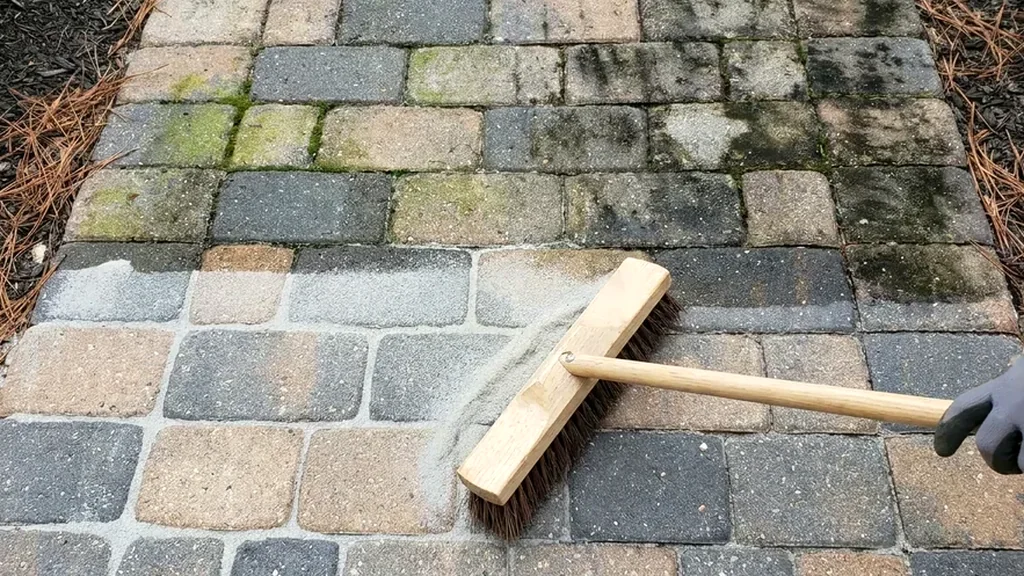
Sand is swept in, wet down and topped off so the pavers lock together and weeds have less room.
Sealer coat
The product goes on dry pavers in thin passes at the coverage rate printed on the label.
How can I tell my pavers need sealing?
Look for faded color, joints sitting below the paver edges, sand spread across the driveway after a storm and water that soaks in instead of beading. A film of green along the shady side is another sign. Adding sand early costs less than resetting pavers that have moved. For a quick opinion, call (689) 329-1279.
Water based or solvent based: which sealer suits Florida pavers?
No single product fits every home, so ask the contractor which sealer goes down and why. Unilock prefers water-based sealer where possible, because it cleans up easily and has little odor, while solvent-based sealer tends to be a little more durable but needs perfectly dry pavers and joints. To compare options for your surface, call (689) 329-1279.
Solvent-based sealer also evaporates faster, which Unilock says makes cooler temperatures better for applying it. Castle Clean and Seal calls water-based sealer the standard for Florida humidity because it lets moisture out through the paver. Whatever the product, it is fair to ask for the brand name and the data sheet when you ask for your free estimate.
Wet look or matte: which finish should I pick?
Pick wet look for deeper color and some shine, or matte to stay close to how the pavers looked new. Around a pool cage, footing matters more than shine. Unilock warns that high gloss sealers can be slippery when wet and calls matte the safer alternative. Ask to see a sample of each when you ask for your free estimate.
How long does paver sealer last in Kissimmee?
Expect two to five years. An Orlando paver company says a coat lasts two to four years and recommends a cleaning every 12 to 15 months to get the most from it. Unilock says three to five. A driveway in full sun sits at the short end, since the average July high here is 91.5 degrees. To have your coat checked, call (689) 329-1279.
Do extra coats of sealer protect pavers longer?
No. Layers do not add years. Unilock says layers laid over one spot cause gloss differences, and an uneven coat leaves haze and lap marks. One even coat at the label rate is the goal. If an offer leans on three or four coats as extra protection, ask why before you ask for your free estimate.
When is the right time to seal pavers in Kissimmee?
Pick a dry stretch, and wait at least a couple of months after a new install. Unilock says efflorescence, the white haze new pavers can show, typically takes two to three months to clear and sometimes up to a year, and sealing over it can trap haze under the coat. If your pavers are new, say so when you call (689) 329-1279.
Unilock asks for 24 to 48 hours of clear skies before sealing, up to 48 hours of dry weather after and temperatures between 50 and 90 degrees. Kissimmee's average July high of 91.5 degrees sits above that, and August brings rain on nearly 18 days. April and November have the fewest rain days, and a summer job may need an early start. To pick a date around the forecast, ask for your free estimate.
Can sealer fix sunken or loose pavers?
No, sealer cannot raise a paver that has sunk or close a gap that has opened. Pavers that wobble under a tire or collect a puddle after rain need the base fixed before any sealer goes near them, and joint sand only stays once they sit level. Ask if leveling is part of the price or billed on its own when you ask for your free estimate.
Which areas around a Kissimmee home can be sealed?
Any hard paved area at the house can take a coat: the driveway, the pool deck, the patio and the walks. Each one wears in its own way, so the plan should fit how the area gets used. To start with the one you care about most, ask for your free estimate.
Driveways
Tires, oil drips and hours of direct sun hit the driveway before anything else. Sealing here pays off most where cars turn in and the joints loosen first.
Pool decks and lanais
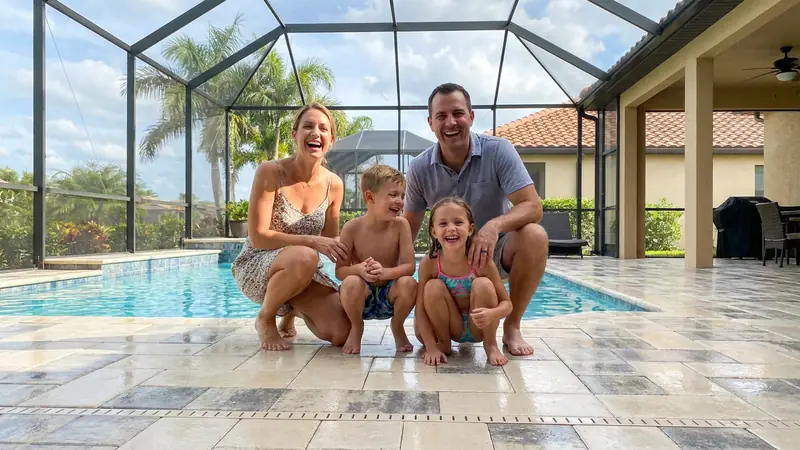
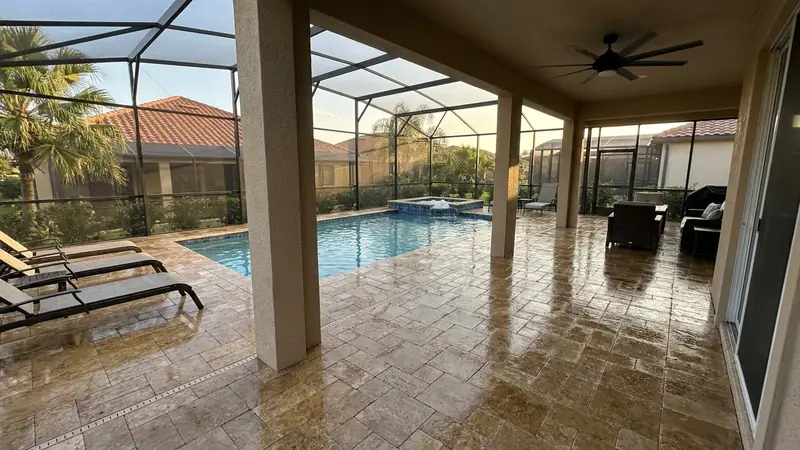
A pool deck sees splash water, chlorine and wet bare feet all day, and a screened cage keeps rain and leaves in the corners. Sealing near a pool should leave a surface that still grips under wet feet.
Patios
A patio under a roofline or a live oak stays damp for most of the day. Sealing there is mostly about clearing the green film from the shady edges.
Walkways and entries
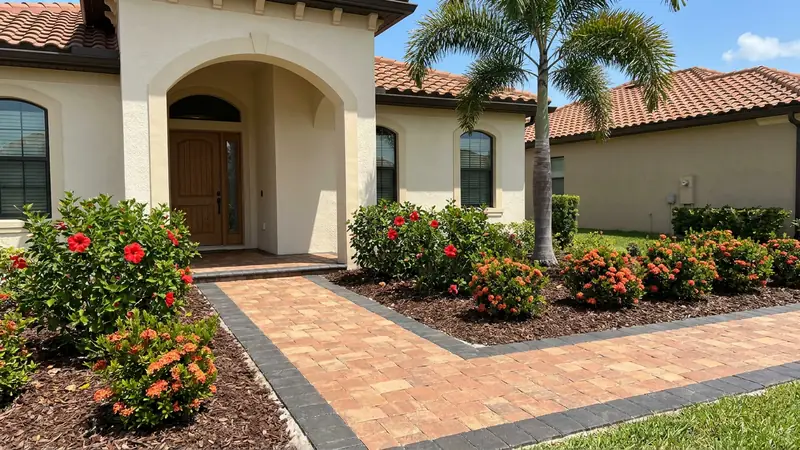
Mulch, potting soil and planter drips collect along a front walk. Sealing on the entry is a small job that guests notice first.
What paver problems show up around Kissimmee?
Five problems come up again and again here: sand lost to rain, green film in shade, orange marks from well water, sun-baked color and old sealer that has failed. Each one costs less to handle early. To learn which apply to you, call (689) 329-1279.
1. Sand lost to summer rain
Kissimmee gets about 8.4 inches of rain in August alone, on nearly 18 days of the month, according to NOAA figures on Wikipedia. Hard downpours wash sand out of the joints, and once the seams run low the pavers shift and weeds root.
2. Green film in shade and beside the cage
Rain falls on about 119 days a year here. Corners that stay damp, like a north walk or the edge of a pool cage, grow algae that turns slick.
3. Orange marks from well water
UF/IFAS says most Florida well water is high in iron, and sprinklers that spray it leave orange streaks. A rust treatment has to come before any sealer, because the coat would lock the stain in.
4. Color baked out of open driveways
The average July high in Kissimmee is 91.5 degrees. A driveway with no shade bakes all afternoon, and bare pavers turn chalky there first.
5. Old sealer gone cloudy or peeling
An Orlando paver company says a coat that has turned white, cloudy or started peeling has to be stripped before new sealer can bond. It is the step that most often changes a quote.
What does paver sealing cost in Kissimmee?
Central Florida companies publish $1.50 to $3.00 per square foot for the clean, sand and seal together, and that is the range this site uses for Kissimmee. Castle Clean and Seal lists driveways of 600 to 1,200 square feet at $1.50 to $2.50 and pool decks at $1.75 to $3.00. Stripping a failed coat can add $500 to $1,000 or more, and the same company sets a $1,000 project minimum. For a number written for your home, ask for your free estimate.
An Orlando paver company says a quote near $0.40 per square foot almost always skips the sand or the wash, and that a quote near $10 usually comes from an installer, not a sealing specialist. If a number looks off, ask which steps it leaves out. To compare a quote you hold, call (689) 329-1279.
Only need a wash? The paver cleaning and joint sand guide covers it, and every town on the list has its own page.
| Paved area | Typical example | Clean, sand and seal |
|---|---|---|
| 300 sq ft | Small patio or walkway | $450 to $900 |
| 600 sq ft | Two car driveway | $900 to $1,800 |
| 1,000 sq ft | Large driveway or pool deck | $1,500 to $3,000 |
| 1,500 sq ft | Driveway plus pool deck | $2,250 to $4,500 |
Math based on the $1.50 to $3.00 per square foot that Central Florida paver companies published as of November 2026. Your contractor sets the actual price after seeing the surface. Repairs, leveling and stripping failed sealer are usually extra.
Why hire a local contractor for paver sealing in Kissimmee?
A contractor who works around Kissimmee already plans for afternoon storms, lake humidity and sprinkler overspray. The price comes on paper, and the decision stays yours. To begin, call (689) 329-1279.
Contractors who know Osceola County weather
A company that covers Kissimmee already plans around afternoon downpours, lake humidity and sprinklers that run every morning. That makes the first visit more useful.
Free to ask
The visit and the estimate cost nothing. If the price does not suit you, say no and owe nothing.
Ranges you can check
Central Florida paver companies publish what they charge per square foot, and this site shows the same range. If a quote lands well outside that range, ask the contractor why.
You set the pace
Get the price on paper and take the time you need. The contractor standards page lists what to confirm before you sign anything.
Ready for a free paver sealing estimate in Kissimmee?
Call, or send the short form, and a contractor answers within 1 business day, usually much sooner.
Free, no obligation
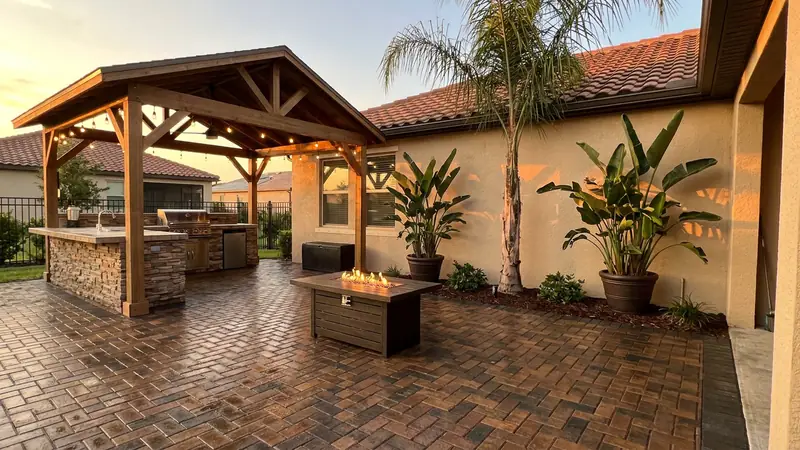
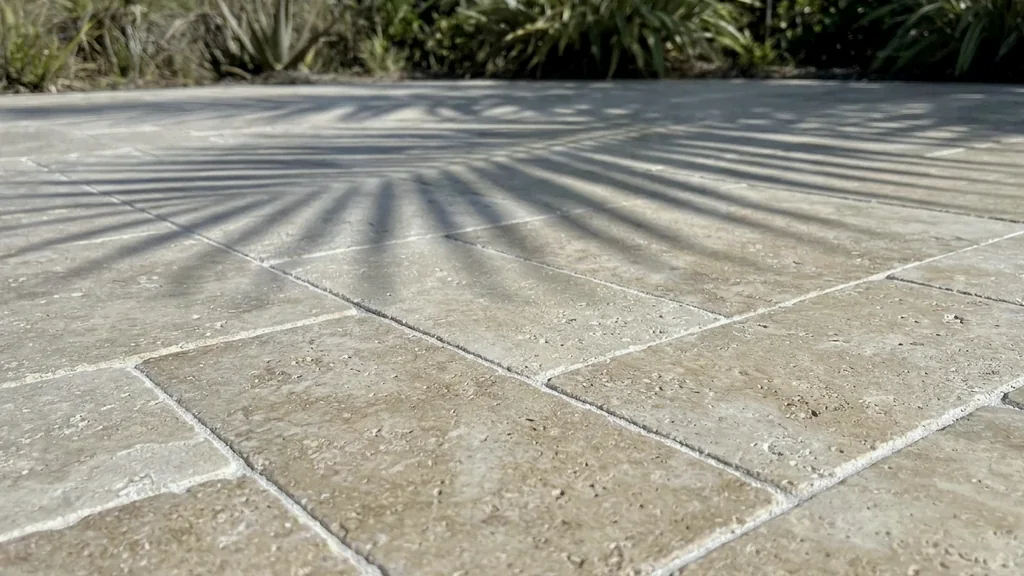
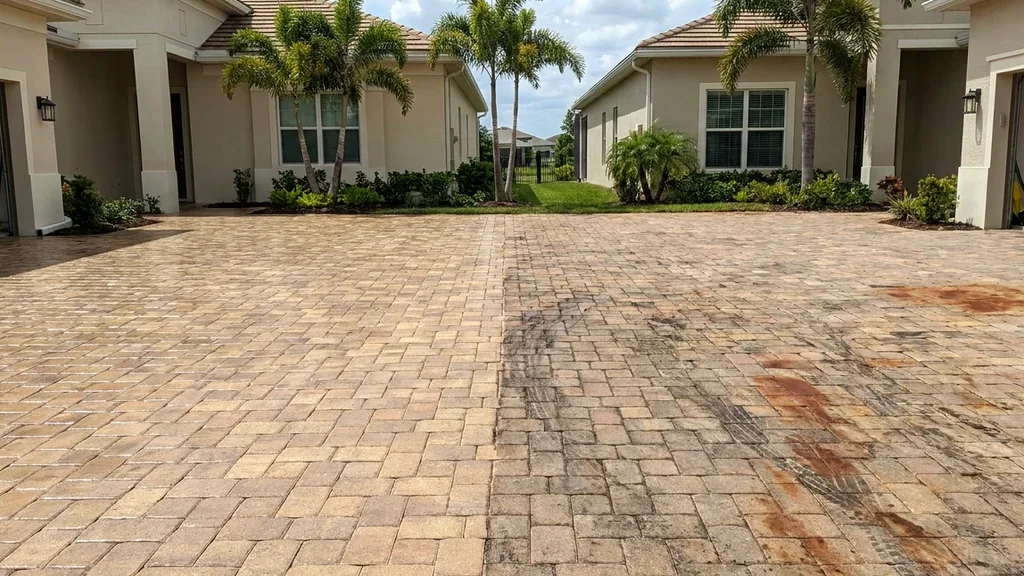
How do Kissimmee pavers look after a fresh seal?
How does the paver sealing process work from start to finish?
Most jobs follow the same five steps, from the first measurements to the last walk-through. To get on the schedule, call (689) 329-1279.
1. Measure and inspect
The contractor measures the area for the sealing quote and marks sunken pavers, bare joints, old sealer and any spot where water stands.
2. Cover and protect
Pool cage screens, plants and the garage door are covered, and the sprinklers are switched off. Sealer overspray does not wash off, so a metal sheet goes along the edges.
3. Treat and wash
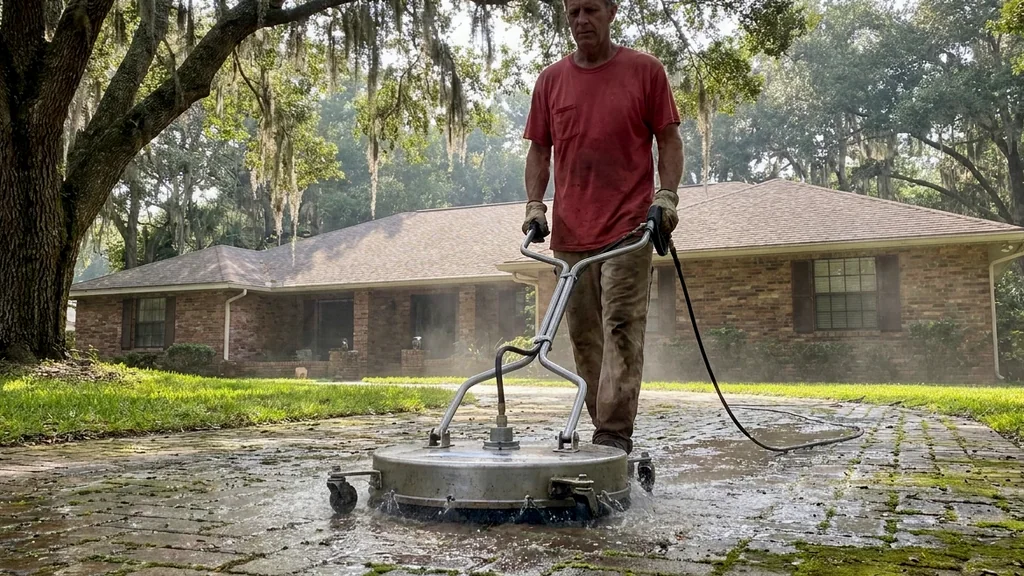
An algae treatment and, where needed, a rust remover go on first. A rotary surface cleaner then washes the pavers at under 1,500 PSI, which keeps the sand in the joints.
4. Sand the joints
When the pavers are dry, joint sand is swept in, wet down to settle it and topped off, and the extra is blown clear.
5. Seal and walk the job
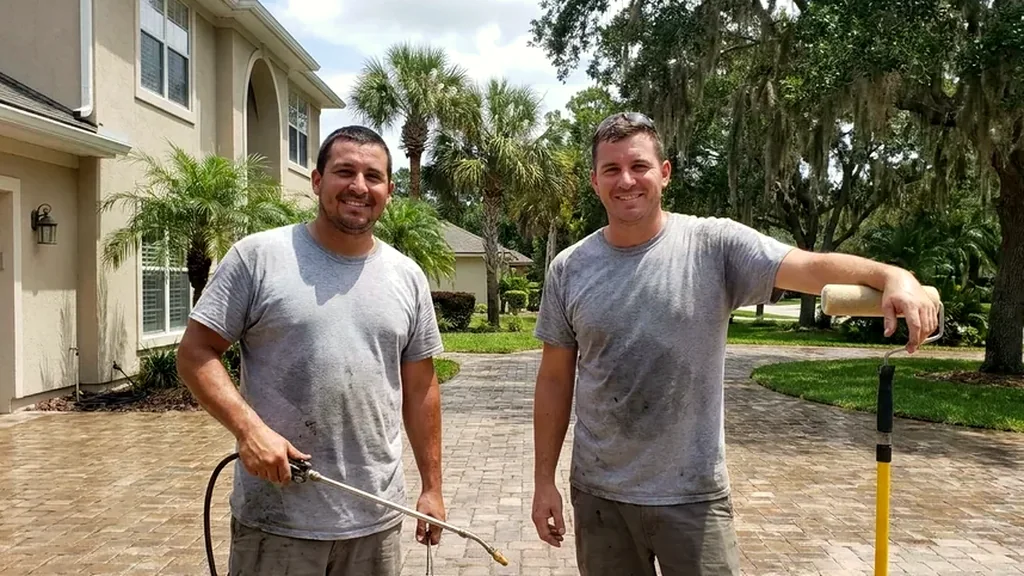
A pump sprayer lays the sealer down and a dry roller soaks up the puddles. The contractor then walks you through how long to stay off the surface.
Frequently Asked Questions
How much is paver sealer?
Sealer runs about $80 to $150 a gallon, according to Unilock, and a gallon of water-based product covers 100 to 150 square feet. By that math, one coat on a 600 square foot driveway uses roughly $320 to $900 of product. The rest of a quote pays for the wash, the sand and the labor, which is why the full job costs more than the sealer.
Is it better to spray or roll paver sealer?
A contractor often does both. Unilock suggests a sprayer to lay the sealer on evenly, then a dry roller to soak up puddles and drips before they dry as streaks. The method matters less than an even, thin coat, so ask how the contractor plans to apply it.
How long does paver sealing last in Florida?
An Orlando paver company puts it at two to four years and says a wash every 12 to 15 months helps a coat last. Unilock gives three to five. A shaded pool deck with light use sits at the long end, and a sunny driveway sits at the short end.
What happens if pavers are not sealed?
They keep working, but they weather faster. Bare pavers fade in the sun, soak up stains and grow algae more easily in humid air. Castle Clean and Seal adds that sealed areas next to unsealed ones suffer, because weeds and mold spread across the border.
How much does it cost to seal outdoor pavers?
Central Florida companies publish $1.50 to $3.00 per square foot for the clean, sand and seal. Stripping a failed coat can add $500 to $1,000 or more, and one company sets a $1,000 project minimum. A 400 square foot patio may land near that minimum.
How long does a paver sealing job take in Kissimmee?
Most standard jobs finish in a day, says an Orlando paver company, while stripping and resealing can run two to three days. Then comes drying. Water-based sealer is walkable in three to four hours and cures in 24 to 48, so the sprinklers stay off for that stretch.
Can the pavers around a Kissimmee pool cage be sealed?
Yes. Pool decks usually cost a little more, with Castle Clean and Seal listing $1.75 to $3.00 per square foot. An Orlando paver company notes that decks inside screen enclosures change how long the work takes. Ask about a matte finish or a non-slip additive, since Unilock warns that high gloss can be slippery when wet.
When should I seal pavers in Kissimmee to stay ahead of the rain?
Look at the dry months. NOAA figures on Wikipedia show rain on about 6 days in April and November, against nearly 18 in August. Unilock asks for 24 to 48 hours of clear skies before sealing and up to 48 hours of dry weather after, so book when the forecast is quiet.
Do the car and the patio furniture have to move before sealing?
Yes, the cars go out of the driveway before work starts. After sealing, Castle Clean and Seal says to keep feet off for 4 to 6 hours, furniture off for about a day and cars off for at least 48 hours. Your contractor should give you the exact times for the product used.
Ask what your Kissimmee pavers need next
Tell a contractor your street and the paved area that worries you, and expect a reply within 1 business day, usually much sooner.
Free, no obligation